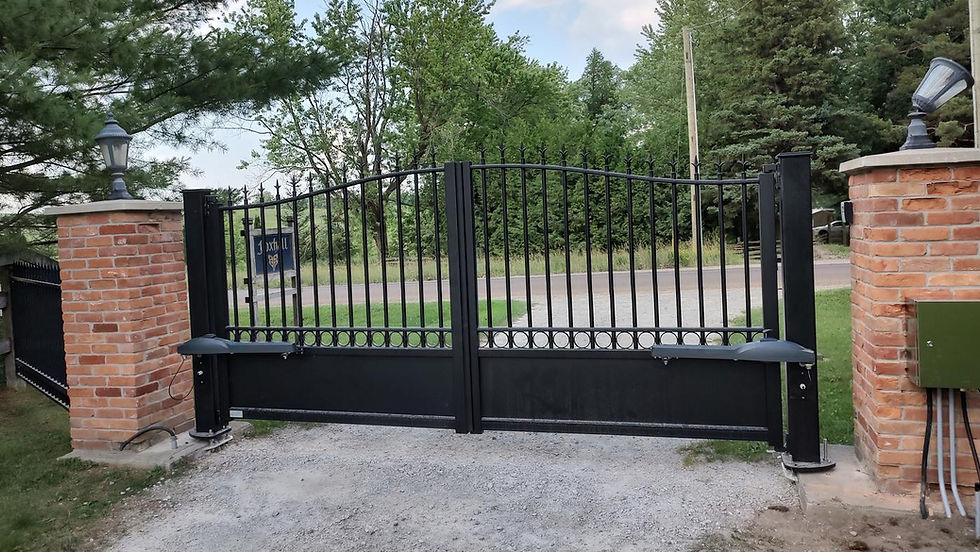
Double Gates Not Meeting in the Middle - Causes and Fixes

Double gates drifting out of alignment are one of the most common callbacks in Ontario. Freeze-thaw cycles, heavy clay soils and wider, heavier residential gates all work against a gate that was set true at handover. The result is an offset at the centre, a drop rod that misses its receiver, and a latch that won't catch.
Finding the real cause on the first visit saves a return trip. Before adjusting any hardware, note where the leaves are out of line:
A. Gap wider at the top, leaves dropping at the centre: sag, hinges or a leaning post.
B. One leaf higher than the other: frost heave, settlement or a post that has moved.
C. Leaves overshooting or stopping short: latch, stop or operator settings.
D. Fit changes with the season: ground movement or wood movement.
Below are the seven causes we see most often, the field checks that confirm each one, and fixes that hold through an Ontario winter.
Here's a breakdown of the causes we'll cover:
7 Causes and Fixes for Gates Not Meeting in the Middle
1. Sagging Gate Leaves
Sag is still the number-one cause. It usually comes from hinges undersized for the leaf, a brace installed in the wrong direction, or a wide leaf with no diagonal at all. Remember that load on the top hinge climbs with leaf width, not just weight, so a long leaf can overload hardware that's rated for its weight.
How to check: Run a string line or level across the top rails with both leaves closed. Measure the drop at the free end of each leaf against its hinge end. If both leaves droop toward the centre and the posts are plumb, it's the leaves.
How to fix:
Brace in compression from the bottom hinge corner to the top latch corner. A brace running the other way is in tension and does nothing to hold the leaf up.
Add a cable and turnbuckle from the top hinge corner to the bottom latch corner on leaves that need adjustment over time.
Spec hinges for leaf weight and width with a safety margin, and add a third hinge on tall leaves.
Don't count on a gate wheel to carry the load. In Ontario, snow and ice stop wheels cold for months of the year.
2. Loose or Worn Hinges
The top hinge carries the leaf in tension, pulling away from the post, while the bottom hinge pushes in. That's why the top hinge mounting is usually what fails first. Lag screws in wood posts loosen as moisture and frost cycle through the wood, and pins and bushings wear on heavy, high-use gates.
How to check: Lift the free end of the leaf. Movement you can see or feel at the hinge, a pin with play, or fasteners backing out of the post confirm it.
How to fix:
Replace lag screws with through-bolts and backing plates so the top hinge can't pull out.
Use hot-dip galvanized or stainless hardware. Road salt and wet winters destroy plain zinc plating in a few seasons.
Replace worn pins and bushings before they elongate the hinge knuckles.
Install adjustable hinges. They let you correct seasonal movement on a quick service call instead of remounting the leaf.
3. Leaning or Shifting Gate Posts
A hinge post that leans even a few degrees into the opening drops the free end of a long leaf noticeably at the centre. Undersized posts, shallow holes and too little concrete are the usual causes. Size the hinge post for the gate it carries, not for the fence line.
How to check: Check plumb on two adjacent faces of each hinge post. Measure across the opening at the top and bottom of the posts. Any difference means the posts are rotating toward or away from each other. If you can, take the leaves off and recheck the bare posts.
How to fix:
A ground-anchored tension cable can pull a slight lean back, but treat it as a temporary fix.
For a permanent fix, dig out, plumb and reset the post below frost depth. Most installers in southern Ontario go at least 1.2 m (4 ft), and deeper in the north. Check the local requirement.
Make the hole roughly three times the post width, and let the concrete cure fully before you rehang the leaves.
Use steel hinge posts for heavy gates.
On wide openings, tie the two posts together with a buried grade beam so they can't lean in toward each other.
4. Frost Heave and Ground Movement
Much of southern Ontario sits on clay that holds water and heaves hard. Frozen soil also grips the sides of a post or footing and lifts it, even when the base is below frost. Because two posts rarely heave the same amount, one leaf ends up higher than the other, then settles back unevenly in spring.
How to check: The gate is out in winter and close to right in summer, or the leaves sit at different heights at the centre. Look for lifted or cracked footings and posts sitting higher than the fence line. Photographing leaf heights at handover makes this easy to prove later.
How to fix:
Pour smooth-sided footings, such as a form tube with a belled base, and avoid mushroomed concrete at grade that gives frost something to grab.
Keep water away from the posts with free-draining gravel at the base and grading that sheds runoff.
On heaving sites, build a spring adjustment visit into the job, and tell the client up front that minor seasonal movement is normal.
5. A Racked or Out-of-Square Gate Frame
If the posts are plumb and the hinges are tight, check the leaf itself. Frames rack when joints loosen, when a leaf wasn't squared at assembly, or after wind load, vehicle contact or kids riding the gate. Prefab leaves sometimes arrive out of square, so check before you hang them.
How to check: Measure each leaf corner to corner both ways. If the diagonals differ by more than about 6 mm (1/4 in.), the frame is racked.
How to fix:
Pull the frame square with a ratchet strap across the long diagonal, retighten the rail-to-stile fasteners, and lock the corners with gussets or brackets.
On steel and aluminum gates, inspect the welds closely. Cracked aluminum welds are common on lighter frames and usually mean repair or replacement.
6. Wood Swelling, Shrinking or Warping
Wood leaves move with the seasons. A centre gap set tight in a dry stretch can bind after a wet fall, and wet pressure-treated lumber shrinks and twists as it dries in the first year.
How to check: The fit changes with the weather, the leaves rub at the centre, or boards and rails have cupped, bowed or twisted.
How to fix:
Leave a centre gap of about 10 to 13 mm (3/8 to 1/2 in.) on wood leaves.
Build frames from dry, straight stock, and seal all faces, including end grain.
Replace warped rails instead of forcing them back with hardware, and on large gates, recommend a steel or aluminum frame with wood infill to remove most of the movement.
7. Misaligned Latch, Drop Rod, Centre Stop or Operator
If the leaves hang level and square but still won't close together, look at what happens in the middle. Latches shift, centre stops get knocked loose, and drop-rod receivers set in soil heave with the ground or pack with ice.
How to check: The leaves look right but overshoot, bounce back or won't latch. The drop rod catches the edge of its receiver. On automatic gates, release the operators and close the leaves by hand. If they meet properly by hand but not under power, the problem is the operator, not the gate.
How to fix:
Hold both leaves in the correct closed position and reset the latch and keeper to match.
Set drop-rod receivers in concrete below frost or in the driveway surface, and choose receivers that drain so they don't fill with ice.
Install a positive centre stop so both leaves close to the same point every time.
On automatic gates, reset the close limits or stroke, check the arm or actuator geometry, and make sure the operators aren't driving the leaves hard into the stop, which racks frames and loads hinges.
Realign any electric or magnetic lock and its strike plate. A lock that's even slightly off will cause failed closes that look like a gate problem.
Get Better Hardware and Operators from Graft Gate Supply
Most of these callbacks come back to hardware that wasn't built for the job. Hinges are undersized for the leaf, fasteners corrode in road salt, and there's no adjustment left once the posts start to move. Better hardware on day one means fewer trips back in February.
Graft makes gate hardware for installers who need double gates to stay true through Ontario winters, from heavy-duty and adjustable hinges to latches, drop rods and stops. Spec it on your next install and spend less time on callbacks and more time on new jobs.