How to Choose the Right Pivot Hinge for Your Swing Gate

Updated: Aug 9
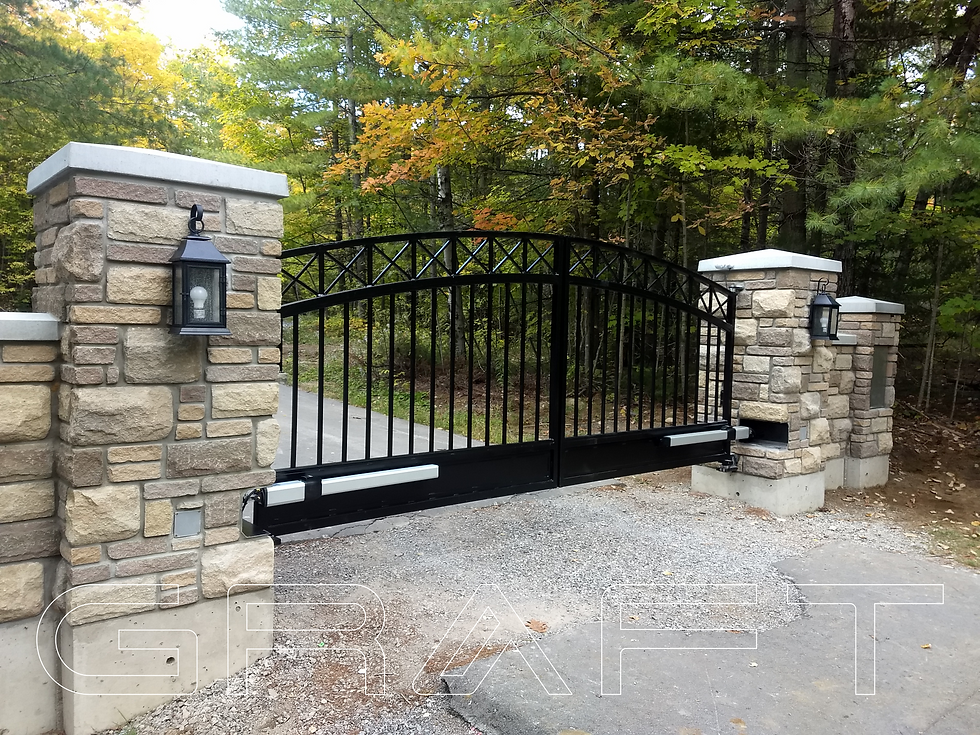
Swing gates cycle open and closed hundreds of times a week, and the hinges carry that load every single time. Selecting the wrong hinge — one that is undersized for the gate weight or the wrong type for the post material — results in sagging, binding, premature wear, and callbacks.
The right pivot hinge supports the full weight of the gate leaf, delivers smooth movement with no friction, and holds alignment over years of daily use.
This guide walks you through what pivot hinges are, the two styles we carry, and the steps to select the correct hinge for your application.
Table of Contents
Graft Gate Supply stocks the pivot hinges your swing gate needs.
What Are Pivot Hinges?
Pivot hinges are designed specifically for swing gates that require free, friction-free movement under load. Unlike standard barrel hinges, pivot hinges use a top hinge with a ball bearing and a bottom hinge with a thrust bearing.
The gate leaf rests between these two points, with the thrust bearing at the bottom carrying the vertical load and the ball bearing at the top maintaining alignment during movement. This bearing configuration is what allows pivot hinges to handle heavy gate leaves without the stiffness or friction that wears out both the operator and the hinge over time.
An automatic operator on a gate with undersized or low-quality hinges will work harder than it needs to, shortening its service life. On manual gates, poor hinges mean the user has to force the gate open and closed. Pivot hinges eliminate that resistance and let the gate move the way it is supposed to.
Types of Pivot Hinges: Weldable and Bolt-On
Weldable:

Weldable pivot hinges are designed for steel posts. The hinge plates weld directly to the post and gate frame, creating a permanent, rigid connection.
This is the right choice for heavier gate applications where maximum strength and stability are the priority. If you are working with steel posts on a commercial or high-traffic gate, weldable hinges give you the strongest possible connection.
Bolt-On:

Bolt-on pivot hinges use a slim-profile L-bracket with two fastening holes on both the top and bottom hinge. They fasten mechanically rather than requiring a weld, which makes them faster to install and allows for alignment adjustments after installation.
Bolt-on hinges are the correct choice when the post is not made of steel — aluminum and wood posts cannot be welded to, so bolt-on is the only viable option. The slim L-bracket profile keeps the installation clean without adding unnecessary bulk.
How to Select the Right Pivot Hinge for Your Gate
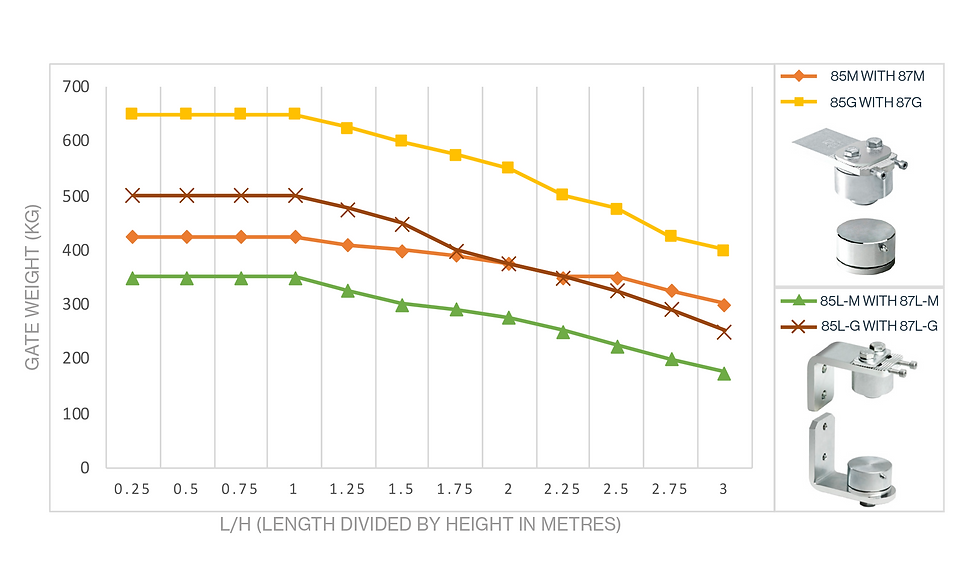
Pivot hinge selection is based on two variables: the ratio of gate leaf length to gate leaf height, and the gate leaf weight. Follow these steps before you place your order.
Step 1: Measure the gate leaf length in metres. This is the horizontal span of the gate leaf from the hinge post to the latch end.
Step 2: Measure the gate leaf height in metres. This is the vertical dimension of the gate leaf.
Step 3: Calculate the length-to-height ratio. Divide the gate leaf length by the gate leaf height.
Example: Gate length is 6 m, gate height is 4 m → 6 ÷ 4 = 1.5
Record this number. It tells you how far the gate extends relative to its height, which affects the torque load on the hinge.
Step 4: Determine the gate leaf weight in kilograms. Weigh the gate leaf or calculate the weight based on the material, profile, and infill. If you are fabricating the gate, get this number before finalizing your hinge selection.
Step 5: Cross-reference the ratio and weight against the hinge load chart. Use the ratio from Step 3 and the weight from Step 4 to identify which Comunello hinge model supports the gate.
Each hinge has a rated load capacity that accounts for both the weight and the lever arm created by the length-to-height ratio. A longer gate exerts more torque on the hinge even at the same weight, which is why the ratio matters.
Common Mistakes to Avoid
The most frequent error we see is selecting a hinge based on weight alone without accounting for the length-to-height ratio. A gate that is long relative to its height puts more leverage on the hinge than a gate of the same weight with a lower ratio. The chart accounts for this — use both variables, not just one.
The second common mistake is using weldable hinges on non-steel posts. Welding to aluminum or wood compromises both the post and the connection. If the post is not steel, use bolt-on.
If you are unsure after running the numbers, contact us. We can confirm the right hinge for your specific gate dimensions and weight before you order.
Get Hardware for Your Gate Project from Graft Gate Supply
We supply Comunello pivot hinges — weldable and bolt-on — to gate installers across Ontario, along with the full range of operators, safety devices, and access control equipment to complete the job.
If you have a gate spec in hand and need confirmation on the right hinge model, reach out to us today for a quote or for product guidance.


